揭示隐变量下谱特征学习的成败关键,给出可诊断的三类场景。
Demystifying Spectral Feature Learning for Instrumental Variable Regression
- 基于谱特征的两阶段最小二乘法,通过拓扑特征空间建模因果关系。
- 性能取决于谱对齐度与特征值衰减速率,决定样本需求量和方法有效性。
- 提出数据驱动诊断方法,适用于需判断因果模型可靠性的研究者。
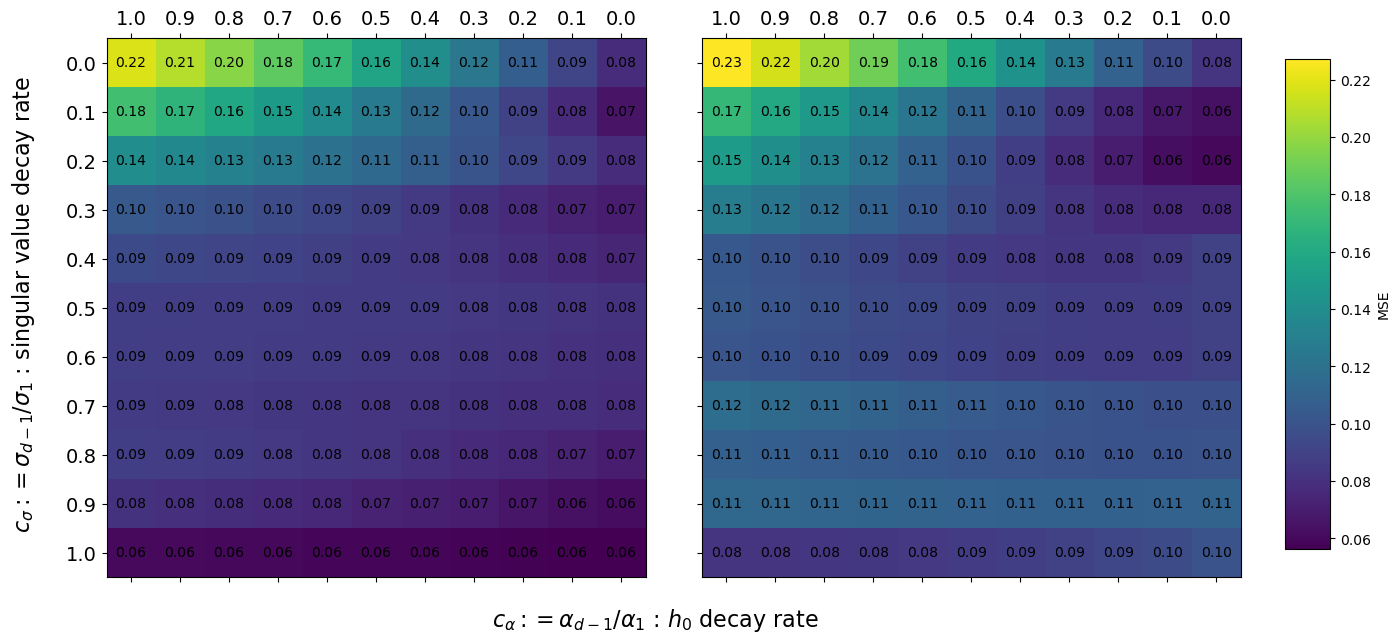
针对存在隐藏混杂因素时的因果效应估计问题,本文研究非参数工具变量回归中的谱特征学习方法。该方法利用处理变量与工具变量之间映射算子的前几个主特征子空间作为学习特征。我们推导了基于谱特征的两阶段最小二乘估计器的泛化误差界,揭示其性能依赖于两个核心因素,形成清晰的三类结果分类:在理想情况下,当结构函数与算子前几个特征函数高度对齐且特征值衰减缓慢(强工具变量)时,方法达到最优;在较差情况下,尽管谱对齐强,但快速特征值衰减(弱工具变量)导致特征学习需要大量样本;在最差情况下,谱对齐弱,方法失效,与特征值特性无关。合成实验验证了该分类体系。进一步提出一种从数据中估计这些谱特性的实用流程,使从业者可诊断实际问题所属类别。在dSprites数据集上的应用展示了该方法的实际价值。
原文摘要 · Abstract (English)
We address the problem of causal effect estimation in the presence of hidden confounders, using nonparametric instrumental variable (IV) regression. A leading strategy employs spectral features - that is, learned features spanning the top eigensubspaces of the operator linking treatments to instruments. We derive a generalization error bound for a two-stage least squares estimator based on spectral features, and gain insights into the method's performance and failure modes. We show that performance depends on two key factors, leading to a clear taxonomy of outcomes. In a good scenario, the approach is optimal. This occurs with strong spectral alignment, meaning the structural function is well-represented by the top eigenfunctions of the conditional operator, coupled with this operator's slow eigenvalue decay, indicating a strong instrument. Performance degrades in a bad scenario: spectral alignment remains strong, but rapid eigenvalue decay (indicating a weaker instrument) demands significantly more samples for effective feature learning. Finally, in the ugly scenario, weak spectral alignment causes the method to fail, regardless of the eigenvalues' characteristics. Our synthetic experiments empirically validate this taxonomy. We further introduce a practical procedure to estimate these spectral properties from data, allowing practitioners to diagnose which regime a given problem falls into. We apply this method to the dSprites dataset, demonstrating its utility.
Thank you to arXiv for use of its open access interoperability. PaperDance 不是 arXiv 官方产品;中文卡片由大模型生成,请以原文为准。