研究数据提交方与审批方的博弈,优化审批阈值。
Strategic Hypothesis Testing
- 构建博弈模型,分析代理方报告策略如何影响审批决策。
- 发现错误率随临界p值单调变化,可确定最优审批阈值。
- 用药物审批数据验证,适合政策制定与监管研究者。
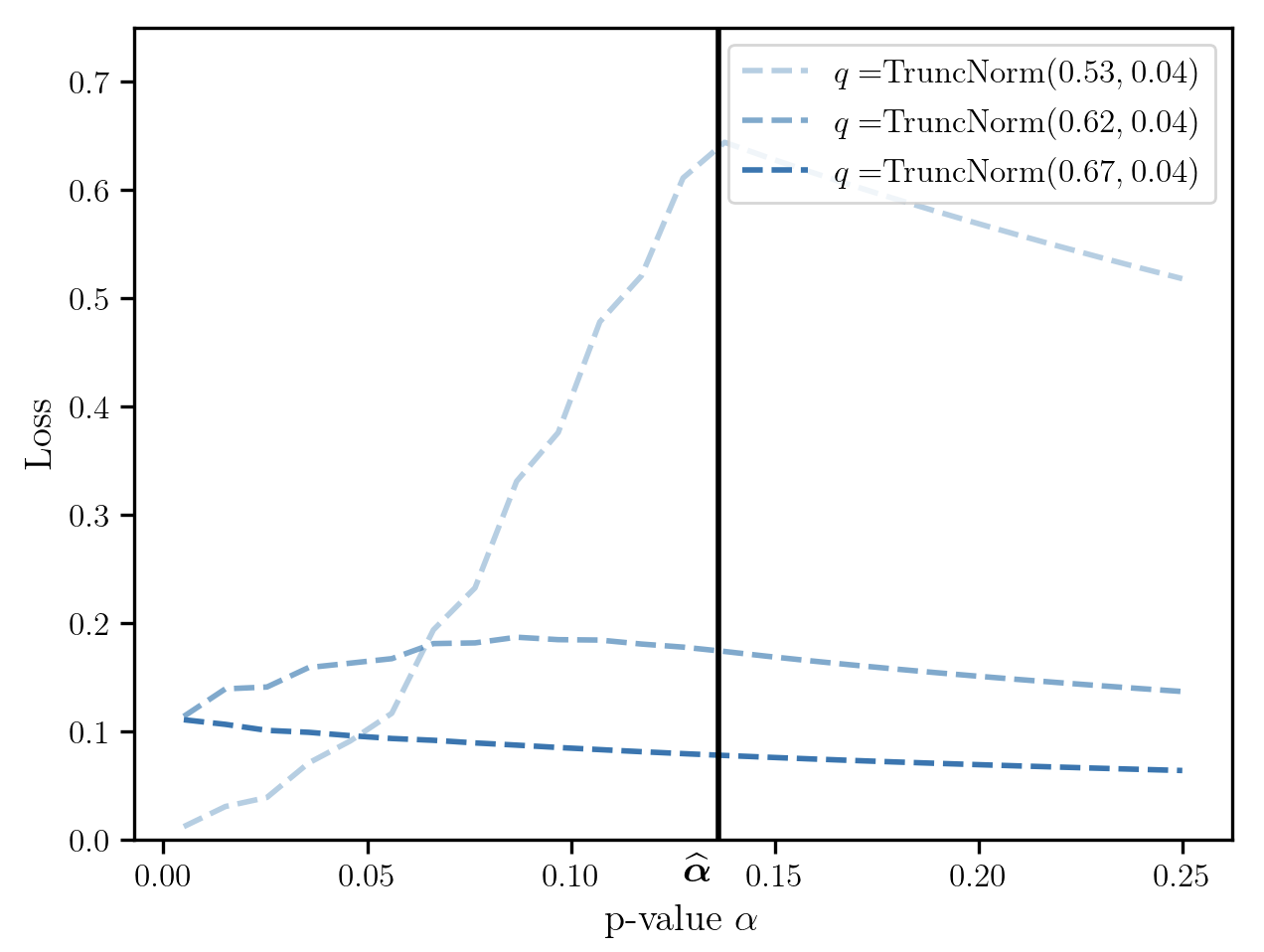
我们研究在主从框架下的假设检验问题,其中具有产品有效性私有信念的策略性代理人向决策方(主)提交数据以获得批准。主采用假设检验规则,需设定一个p值阈值,在误报和漏报之间权衡,同时预判代理人最大化预期利润的激励。基于前期工作,我们建立了一个博弈论模型,刻画代理人参与及报告行为对主统计决策规则的响应。尽管互动复杂,我们发现当按一个可高效计算的临界p值阈值分段时,主的错误呈现明确单调性,从而可解释性地刻画其最优p值阈值。我们利用公开药物审批数据对模型和洞见进行实证验证。总体而言,本工作为假设检验框架内的策略互动提供了全面视角,兼具技术与监管价值。
原文摘要 · Abstract (English)
We examine hypothesis testing within a principal-agent framework, where a strategic agent, holding private beliefs about the effectiveness of a product, submits data to a principal who decides on approval. The principal employs a hypothesis testing rule, aiming to pick a p-value threshold that balances false positives and false negatives while anticipating the agent's incentive to maximize expected profitability. Building on prior work, we develop a game-theoretic model that captures how the agent's participation and reporting behavior respond to the principal's statistical decision rule. Despite the complexity of the interaction, we show that the principal's errors exhibit clear monotonic behavior when segmented by an efficiently computable critical p-value threshold, leading to an interpretable characterization of their optimal p-value threshold. We empirically validate our model and these insights using publicly available data on drug approvals. Overall, our work offers a comprehensive perspective on strategic interactions within the hypothesis testing framework, providing technical and regulatory insights.
Thank you to arXiv for use of its open access interoperability. PaperDance 不是 arXiv 官方产品;中文卡片由大模型生成,请以原文为准。