用混合模型预测零件几何偏差,精度提升73%
Hybrid Machine Learning Framework for Predicting Geometric Deviations from 3D Surface Metrology
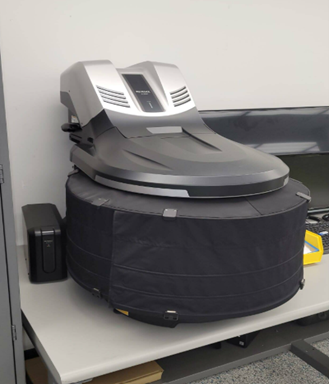
- 结合卷积神经网络与梯度提升树,从多角度3D扫描数据中提取特征
- 预测精度达0.012毫米(95%置信度),较传统方法提升73%
- 可发现制造参数与偏差间的隐藏关联,适合质量控制研究者
本研究针对复杂几何零件在制造过程中难以保持尺寸精度的问题,提出一种基于高分辨率3D扫描的混合机器学习框架。通过采集237个不同批次组件的多角度表面数据,经精确配准、降噪和融合处理生成高保真3D模型。采用卷积神经网络提取特征,结合梯度提升决策树进行建模,实现了0.012 mm的预测精度(95%置信水平),相比传统统计过程控制方法提升73%。该模型还揭示了制造参数与几何偏差之间的潜在关联。研究成果为精密制造中的自动化质量检测、预测性维护及设计优化提供了新路径,并构建了可用于未来预测建模研究的高质量数据集。
原文摘要 · Abstract (English)
This study addresses the challenge of accurately forecasting geometric deviations in manufactured components using advanced 3D surface analysis. Despite progress in modern manufacturing, maintaining dimensional precision remains difficult, particularly for complex geometries. We present a methodology that employs a high-resolution 3D scanner to acquire multi-angle surface data from 237 components produced across different batches. The data were processed through precise alignment, noise reduction, and merging techniques to generate accurate 3D representations. A hybrid machine learning framework was developed, combining convolutional neural networks for feature extraction with gradient-boosted decision trees for predictive modeling. The proposed system achieved a prediction accuracy of 0.012 mm at a 95% confidence level, representing a 73% improvement over conventional statistical process control methods. In addition to improved accuracy, the model revealed hidden correlations between manufacturing parameters and geometric deviations. This approach offers significant potential for automated quality control, predictive maintenance, and design optimization in precision manufacturing, and the resulting dataset provides a strong foundation for future predictive modeling research.
Thank you to arXiv for use of its open access interoperability. PaperDance 不是 arXiv 官方产品;中文卡片由大模型生成,请以原文为准。