用AI让无人机网络自主理解任务并实时调整,适合灾难救援等紧急场景。
A4FN: an Agentic AI Architecture for Autonomous Flying Networks
- 通过多模态感知与大模型理解无人机数据,自动提取服务需求
- 分两层智能体实现环境感知到网络重构的闭环控制
- 适用于无人基础设施下的应急通信,支持动态资源调配
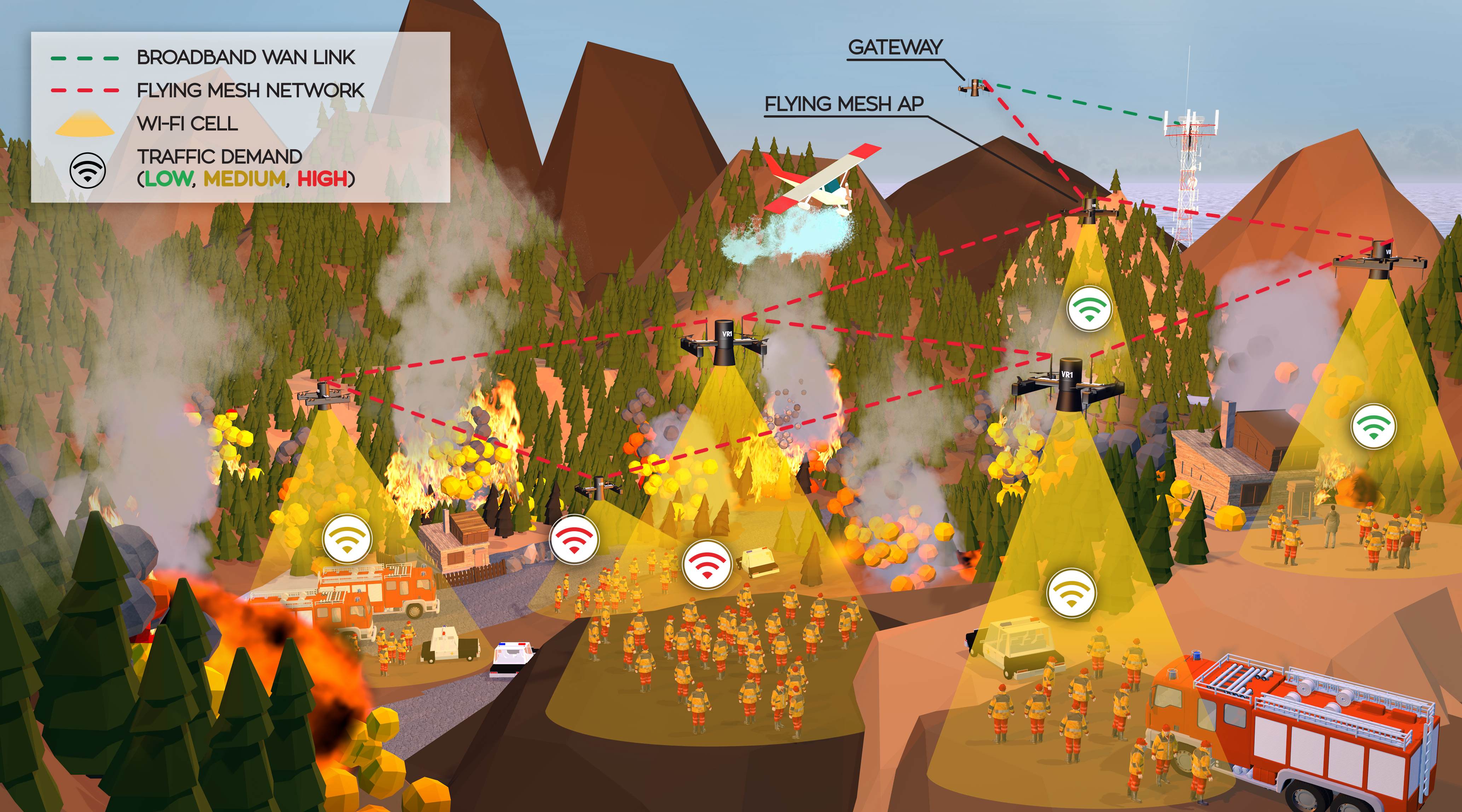
本文提出A4FN,一种面向无人机接入网络(FNs)的智能体式人工智能架构,实现以意图驱动的自主化运行。该架构利用生成式AI和大语言模型(LLMs),通过分布式智能体系统实现实时、上下文感知的网络控制。包含两个核心组件:感知智能体(PA)从无人机搭载的图像、音频和遥测数据中语义解析,生成服务等级规范(SLSs);决策与行动智能体(DAA)根据推断出的意图重构网络。A4FN具备自主性、目标驱动推理和持续感知-行动循环等智能体特性,专为灾后等基础设施缺失的关键场景设计,支持自适应重构、动态资源管理,并兼容新兴无线技术。论文阐述了该架构、核心创新及未来在多智能体协同与智能体式AI集成方面的开放挑战。
原文摘要 · Abstract (English)
This position paper presents A4FN, an Agentic Artificial Intelligence (AI) architecture for intent-driven automation in Flying Networks (FNs) using Unmanned Aerial Vehicles (UAVs) as access nodes. A4FN leverages Generative AI and Large Language Models (LLMs) to enable real-time, context-aware network control via a distributed agentic system. It comprises two components: the Perception Agent (PA), which semantically interprets multimodal input -- including imagery, audio, and telemetry data -- from UAV-mounted sensors to derive Service Level Specifications (SLSs); and the Decision-and-Action Agent (DAA), which reconfigures the network based on inferred intents. A4FN embodies key properties of Agentic AI, including autonomy, goal-driven reasoning, and continuous perception-action cycles. Designed for mission-critical, infrastructure-limited scenarios such as disaster response, it supports adaptive reconfiguration, dynamic resource management, and interoperability with emerging wireless technologies. The paper details the A4FN architecture, its core innovations, and open research challenges in multi-agent coordination and Agentic AI integration in next-generation FNs.
Thank you to arXiv for use of its open access interoperability. PaperDance 不是 arXiv 官方产品;中文卡片由大模型生成,请以原文为准。