无需初始参数估计,用模拟优化生物系统采样点选择。
Simulation-based Methods for Optimal Sampling Design in Systems Biology
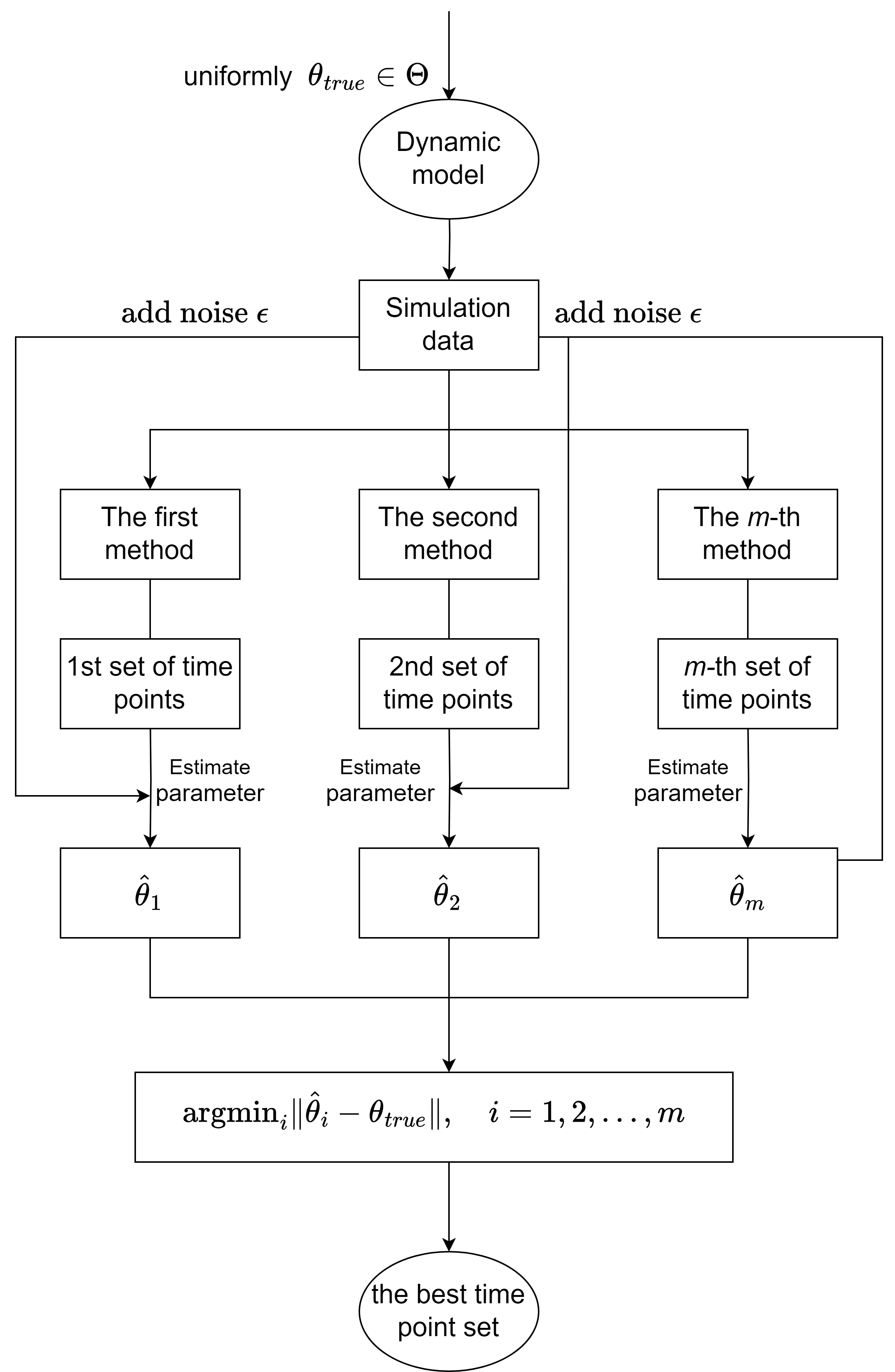
- 基于模拟的E-optimal排序和LSTM神经网络设计采样点。
- 在猎物-捕食者与三室模型中均优于随机和传统方法。
- 适合参数未知或估计不准的系统生物学研究者。
在病毒学、药代动力学和种群生物学等系统生物学领域,动态系统常用于描述生物过程,其参数需通过采样数据估计。核心问题是如何最优选择采样点以实现高精度参数估计。经典方法依赖费雪信息矩阵准则(如A-、D-、E-最优性),但需初始参数估计,若估计不准则结果次优。本文提出两种无需初始参数估计的模拟方法:第一种为E-optimal-ranking(EOR),采用E-最优准则;第二种利用长短期记忆(LSTM)神经网络。基于Lotka-Volterra模型和三室模型的仿真研究表明,所提方法在采样点选择上优于随机选取及经典E-最优设计。
原文摘要 · Abstract (English)
In many areas of systems biology, including virology, pharmacokinetics, and population biology, dynamical systems are commonly used to describe biological processes. These systems can be characterized by estimating their parameters from sampled data. The key problem is how to optimally select sampling points to achieve accurate parameter estimation. Classical approaches often rely on Fisher information matrix-based criteria such as A-, D-, and E-optimality, which require an initial parameter estimate and may yield suboptimal results when the estimate is inaccurate. This study proposes two simulation-based methods for optimal sampling design that do not depend on initial parameter estimates. The first method, E-optimal-ranking (EOR), employs the E-optimal criterion, while the second utilizes a Long Short-Term Memory (LSTM) neural network. Simulation studies based on the Lotka-Volterra and three-compartment models demonstrate that the proposed methods outperform both random selection and classical E-optimal design.
Thank you to arXiv for use of its open access interoperability. PaperDance 不是 arXiv 官方产品;中文卡片由大模型生成,请以原文为准。