针对移动机器人边缘调度,提出更高效的CODECO方案。
A CODECO Case Study and Initial Validation for Edge Orchestration of Autonomous Mobile Robots
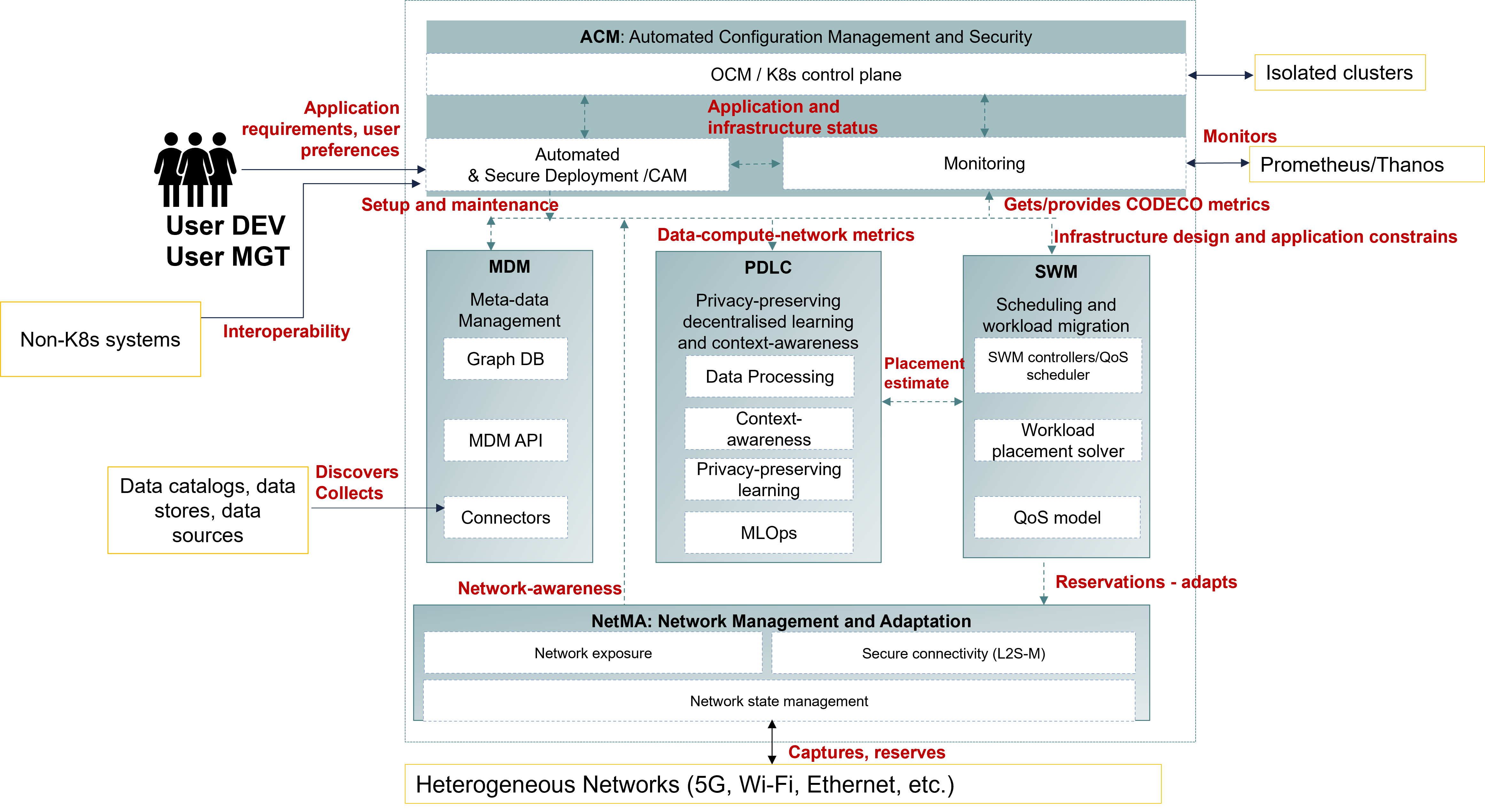
- 用CODECO替代Kubernetes,优化移动机器人的资源调度。
- CPU消耗降低,通信更稳定,内存多用10-15%。
- 适合资源受限的移动机器人系统部署。
自主移动机器人(AMRs)越来越多地在边缘-云连续体中采用容器化微服务。尽管Kubernetes是此类系统的事实标准编排器,但其对稳定网络、同质资源和充足计算能力的假设,在移动且资源受限的机器人环境中并不完全成立。本文描述了一个智能制造中AMR的案例研究,并在受控的KinD环境中对CODECO编排与标准Kubernetes进行了初步对比。评估指标包括Pod部署与删除时间、CPU和内存使用率、以及跨Pod数据传输速率。结果表明,CODECO在降低CPU消耗、实现更稳定的通信模式方面表现更好,代价是带来适度的内存开销(10-15%)以及由于安全叠加层初始化导致的轻微延迟增加。
原文摘要 · Abstract (English)
Autonomous Mobile Robots (AMRs) increasingly adopt containerized micro-services across the Edge-Cloud continuum. While Kubernetes is the de-facto orchestrator for such systems, its assumptions of stable networks, homogeneous resources, and ample compute capacity do not fully hold in mobile, resource-constrained robotic environments. This paper describes a case study on smart-manufacturing AMRs and performs an initial comparison between CODECO orchestration and standard Kubernetes using a controlled KinD environment. Metrics include pod deployment and deletion times, CPU and memory usage, and inter-pod data rates. The observed results indicate that CODECO offers reduced CPU consumption and more stable communication patterns, at the cost of modest memory overhead (10-15%) and slightly increased pod lifecycle latency due to secure overlay initialization.
Thank you to arXiv for use of its open access interoperability. PaperDance 不是 arXiv 官方产品;中文卡片由大模型生成,请以原文为准。