用深度学习提升烟雾中仪表图像清晰度,助力应急响应
Enhancing the quality of gauge images captured in smoke and haze scenes through deep learning
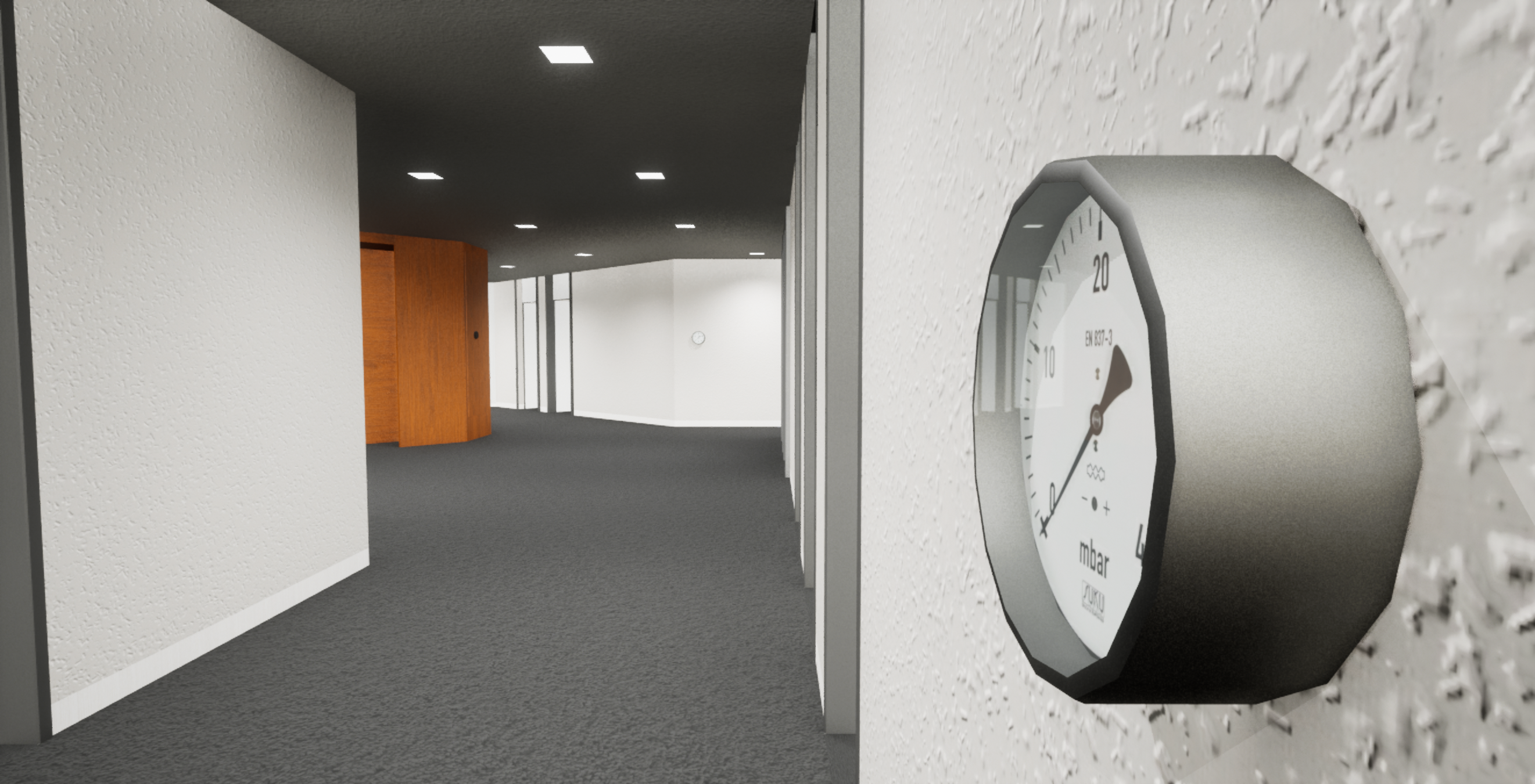
- 采用FFA-Net与AECR-Net模型进行去 haze/烟处理
- 合成数据集达1.4万张,去 haze 后SSIM达0.98、PSNR达43dB
- 适用于灾害场景下自动化仪表读数,对应急人员有实用价值
在雾霾和烟雾环境中拍摄的图像因能见度降低而难以识别,影响基础设施监控,并阻碍紧急救援。本文研究利用深度学习模型提升烟雾环境中仪表图像的机器可读性,实现精准仪表数据解读,为一线救援人员提供支持。采用FFA-Net与AECR-Net两种网络架构,增强受轻度至重度雾霾及烟雾污染的仪表图像。由于缺乏真实模拟仪表图像基准数据集,研究使用Unreal Engine生成超过14,000张合成图像。模型在烟雾与雾霾数据集上分别按80%训练、10%验证、10%测试划分。在合成雾霾数据集上,SSIM约为0.98,PSNR达到43 dB,表现接近当前最优水平。相较之下,AECR-Net在鲁棒性上优于FFA-Net。尽管烟雾数据集结果较差,但模型仍取得有意义成果。烟雾因不均匀性和高密度,更难处理。此外,两模型主要针对去 haze 而非去烟设计。实验表明,深度学习可显著提升烟雾与雾霾场景中模拟仪表图像质量,且增强后的图像可成功用于自动仪表读取。
原文摘要 · Abstract (English)
Images captured in hazy and smoky environments suffer from reduced visibility, posing a challenge when monitoring infrastructures and hindering emergency services during critical situations. The proposed work investigates the use of the deep learning models to enhance the automatic, machine-based readability of gauge in smoky environments, with accurate gauge data interpretation serving as a valuable tool for first responders. The study utilizes two deep learning architectures, FFA-Net and AECR-Net, to improve the visibility of gauge images, corrupted with light up to dense haze and smoke. Since benchmark datasets of analog gauge images are unavailable, a new synthetic dataset, containing over 14,000 images, was generated using the Unreal Engine. The models were trained with an 80\% train, 10\% validation, and 10\% test split for the haze and smoke dataset, respectively. For the synthetic haze dataset, the SSIM and PSNR metrics are about 0.98 and 43\,dB, respectively, comparing well to state-of-the art results. Additionally, more robust results are retrieved from the AECR-Net, when compared to the FFA-Net. Although the results from the synthetic smoke dataset are poorer, the trained models achieve interesting results. In general, imaging in the presence of smoke are more difficult to enhance given the inhomogeneity and high density. Secondly, FFA-Net and AECR-Net are implemented to dehaze and not to desmoke images. This work shows that use of deep learning architectures can improve the quality of analog gauge images captured in smoke and haze scenes immensely. Finally, the enhanced output images can be successfully post-processed for automatic autonomous reading of gauges
Thank you to arXiv for use of its open access interoperability. PaperDance 不是 arXiv 官方产品;中文卡片由大模型生成,请以原文为准。